
The Duravant family of operating companies serve the food processing, packaging and material handling segments.




















ROI calculation: when does a palletizing machine pay for itself in man-hours and damage?
April 20, 2026
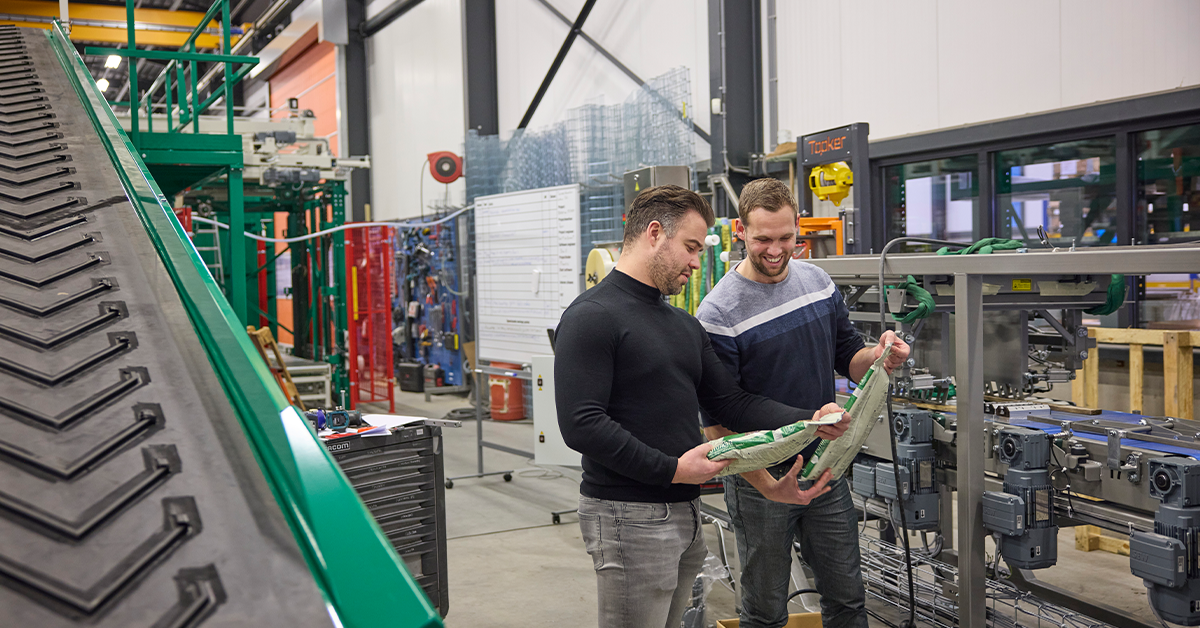
Manually stacking bags or boxes on a pallet is hard work. It takes a lot of time and regularly leads to errors on the shop floor. Moreover, finding reliable staff for this work is becoming increasingly difficult. This causes unnecessary delays in your production process. An automatic palletizing machine structurally solves these problems. But when exactly is this investment profitable for your company?
The hidden costs of manual stacking
When manually stacking, you often only look at the direct hourly wage. However, there are more cost items to take into account. Think of fatigue, which causes the pace to decline throughout the working day. Products also occasionally fall, leading to direct financial loss. These hidden costs make manual work unexpectedly expensive.
How much do you save on man-hours?
A machine continuously works at exactly the same pace. You have no breaks, fatigue or changing shift schedules to deal with. This saves directly on expensive labour costs. The staff who previously stacked can now be deployed for other work. This significantly increases the efficiency of your entire packaging line.
Less product damage means more profit
People make mistakes, especially with heavy and repetitive work. A torn bag or a broken box costs money directly. A palletizing machine places every product with extreme precision in the right position.
- The chance of drop damage decreases drastically.
- You waste less valuable product during the process.
- Pallets are more stable, which effectively prevents transport damage.
This structural saving on product damage directly reduces your operational costs.
The impact of a lower absenteeism rate
Heavy lifting often leads to back problems and other physical discomfort. Sick leave is an enormous cost item for every production company. By automating the heavy work, you create a safer workplace. Your employees stay healthier and absenteeism decreases. This has a very positive impact on your ROI calculation.
Your ROI in practice with Votech
The exact payback period depends on your specific situation. We often see that the investment pays for itself within two to three years. At Votech, we are happy to help you with a realistic and honest calculation. We look at your current wage costs, production speed and product waste. This way, you know exactly what to expect in advance.
Frequently asked questions about ROI calculation: when does a palletizing machine pay for itself in man-hours and damage?
What is the average payback period of a palletizing machine?
In most cases, the payback period is between one and a half and three years. This strongly depends on the number of shifts you run. The more often the machine runs, the faster the investment is recovered.
How do I calculate the saving on product damage?
Look at the current waste due to human errors during stacking. Multiply this number by the cost price of your product. Since a machine eliminates these errors, this amount is your direct annual saving.
Is a palletizing machine also profitable for small productions?
Yes, automation can be very profitable even at a lower production capacity. You save not only on speed, but also on absenteeism and damage. Moreover, it gives you the flexibility to easily scale up in the future.
Conclusion
A palletizing machine is a smart investment that reliably pays for itself. You reduce your wage costs, minimise product damage and improve working conditions. Want to know how quickly this machine pays for itself in your facility? Then contact the experts at Votech for clear tailor-made advice.